yuricyang.github.io/how-time-shapes-a-post-brutalism-construction
This project explores how time shapes Brutalist architecture. Inspiration from travels through the Caucasus regions, where Soviet-era buildings once stood as grand, centralized symbols of national aspirations and collective well-being. Yet over time, most have fallen into disrepair, been demolished, or simply forgotten by both people and time. Walking through these countries, one senses the desolation radiating from the buildings and the lingering echoes of a past that “once had.” The architectural traces profoundly embody the theme of time. It's not merely the aging, collapse, rust, and cracks of the building materials themselves, but also the imprints of human activity left upon the structures—wave after wave of people passing through them and leaving something behind. The very form of a building can also reflect the historical context it's associated with, the prevailing political leanings of its era. Buildings themselves seem like commas punctuating the passage of time.
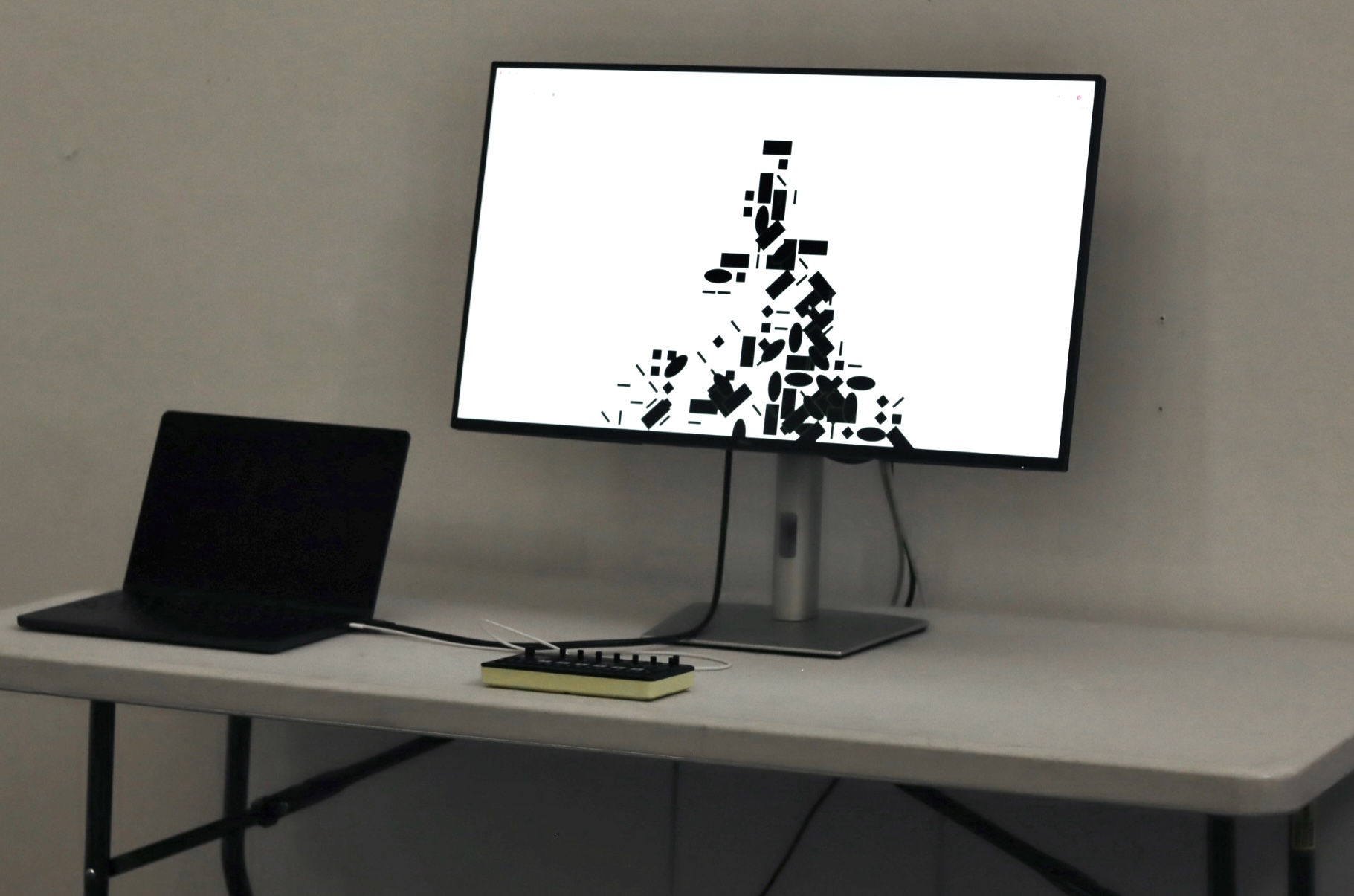
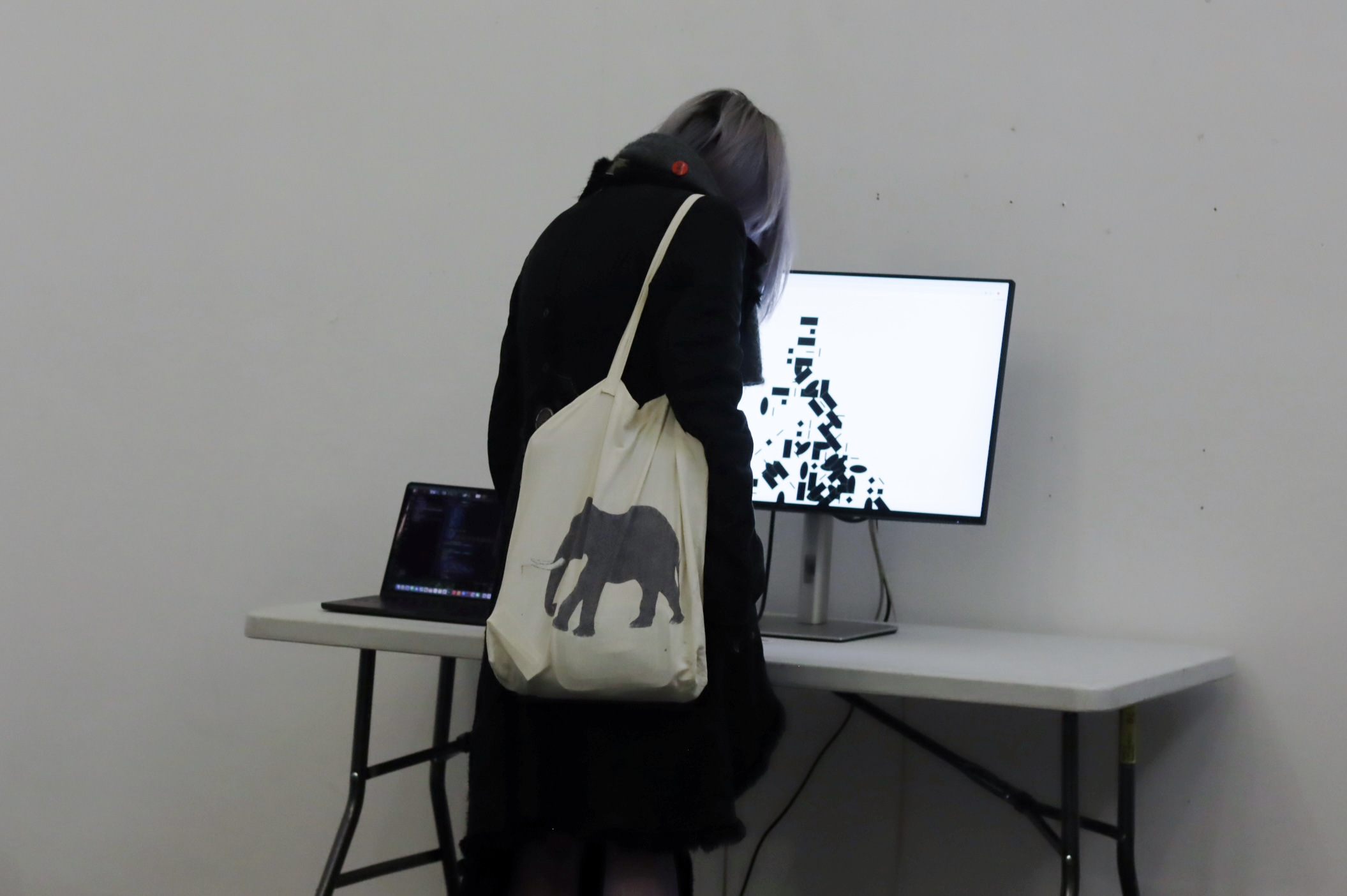
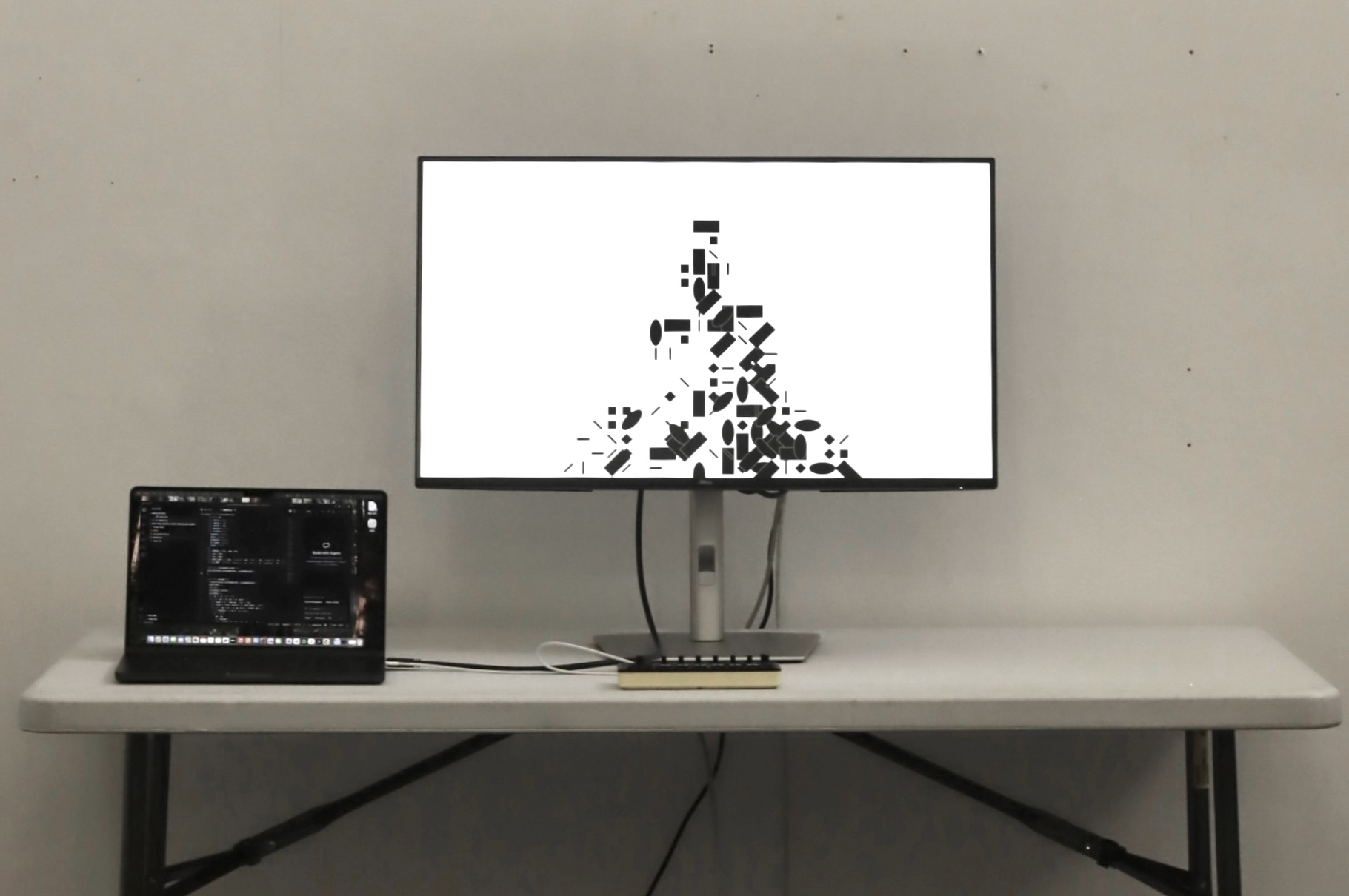
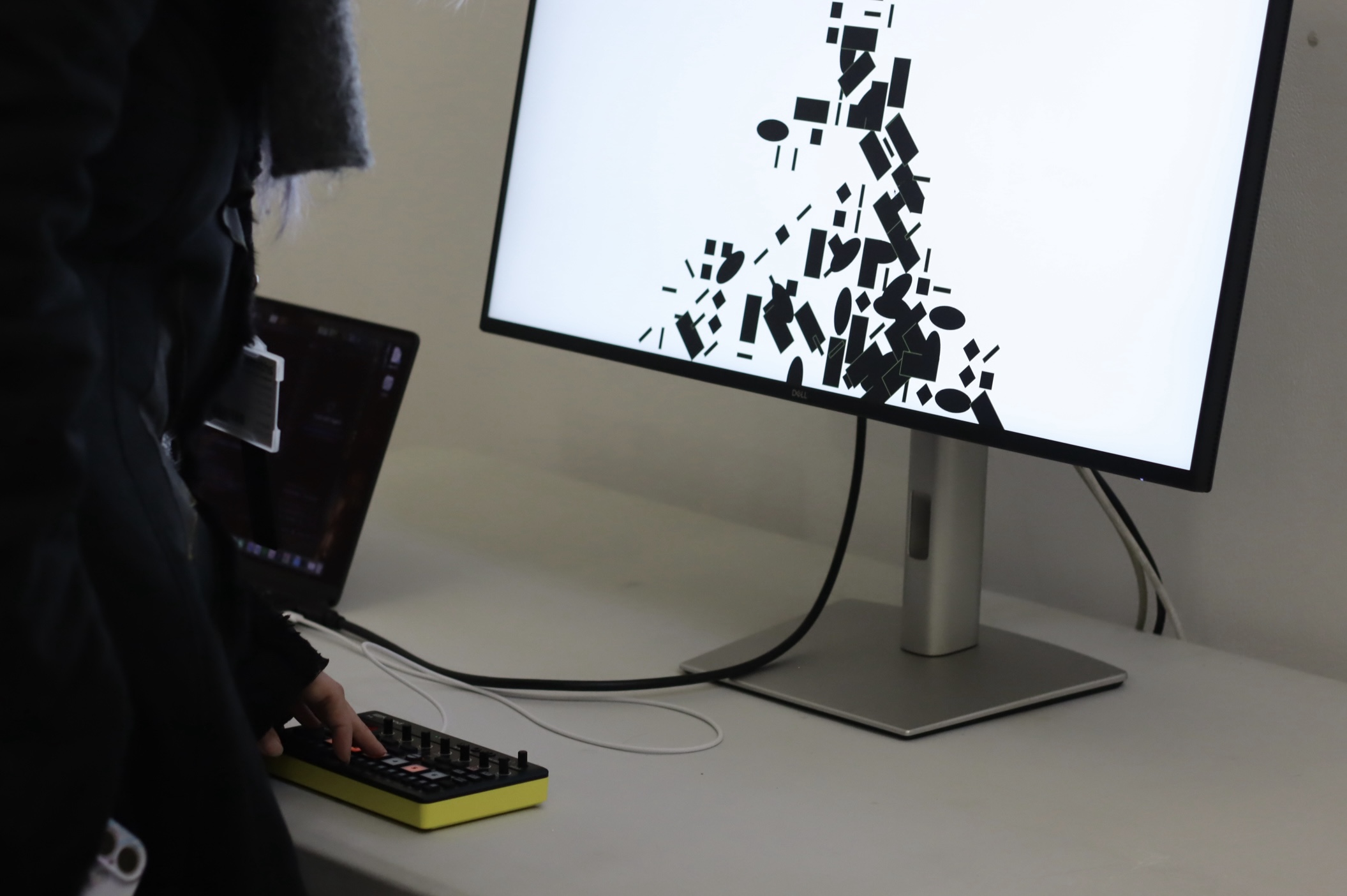
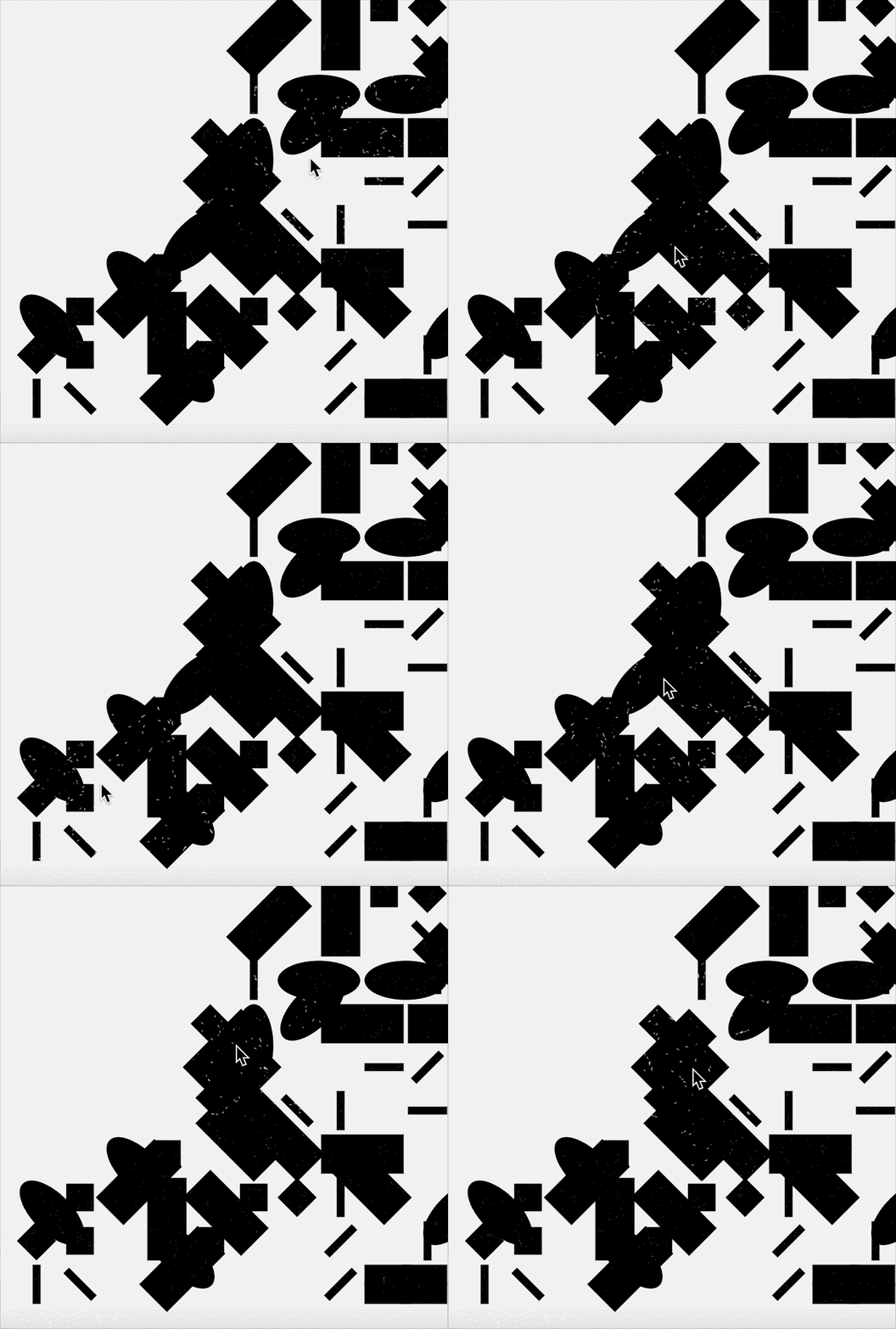
The project is built on p5js, randomly arranges five geometric shapes which extract from the fundamental graphic of these buildings, using grid system to form architectural prototypes. As seconds pass, any single shape rotates 45-90 degrees, generating subtle shifts in the overall silhouette. Clicking the mouse removes unwanted shapes. Simultaneously, the project connects to a Roland p6 synthesizer as a key switch, with patches 2-5 controlling the color effects of each type of shape. When a key is pressed, a green stroke appears along the shape's edges, symbolizing the effect of green moss.
How Time Shapes a Post Brutalism Construction | website | 2026
Size variable
Process
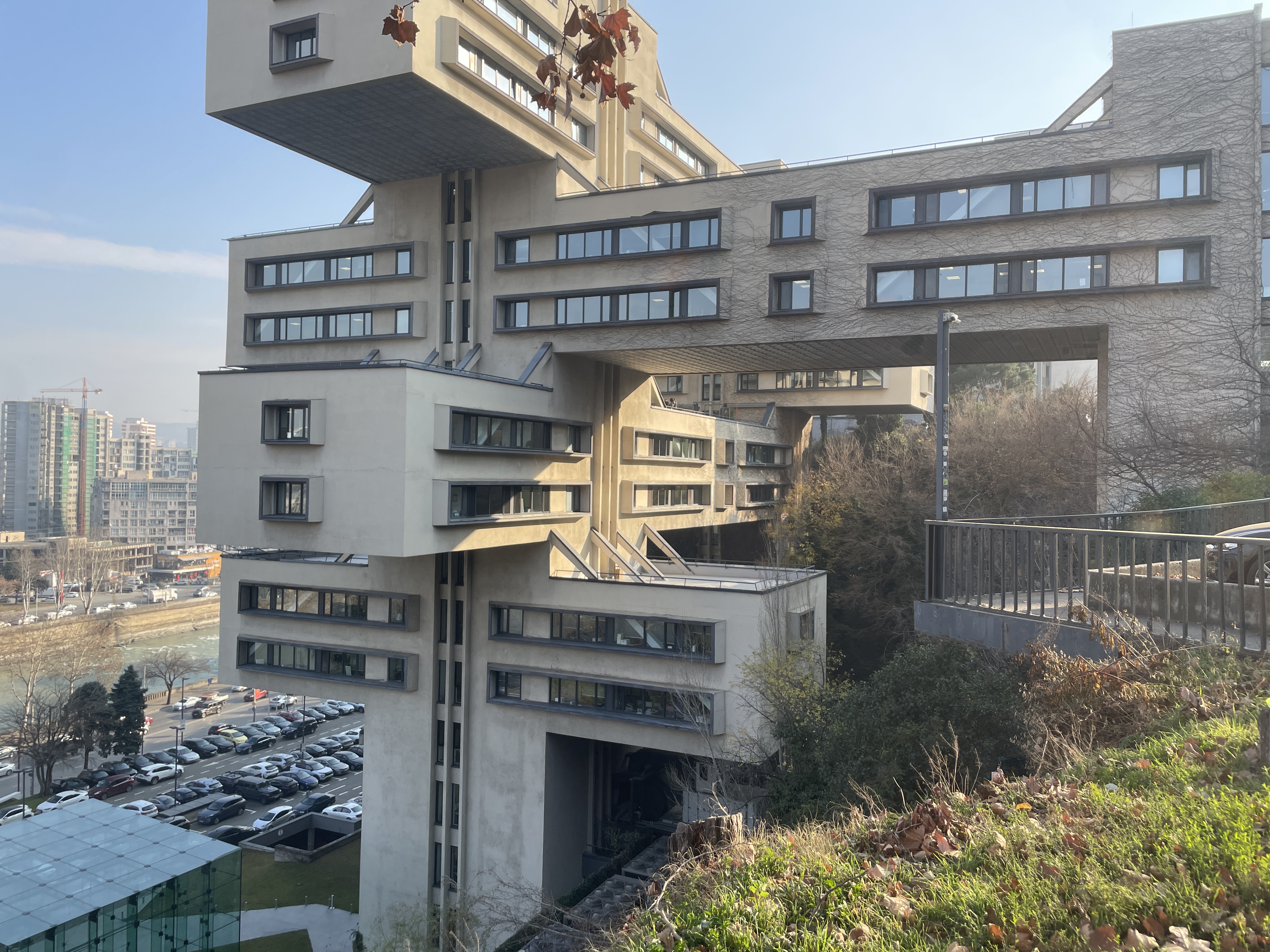
Bank of Georgia, shot from Tbilisi, Georgia, 2026
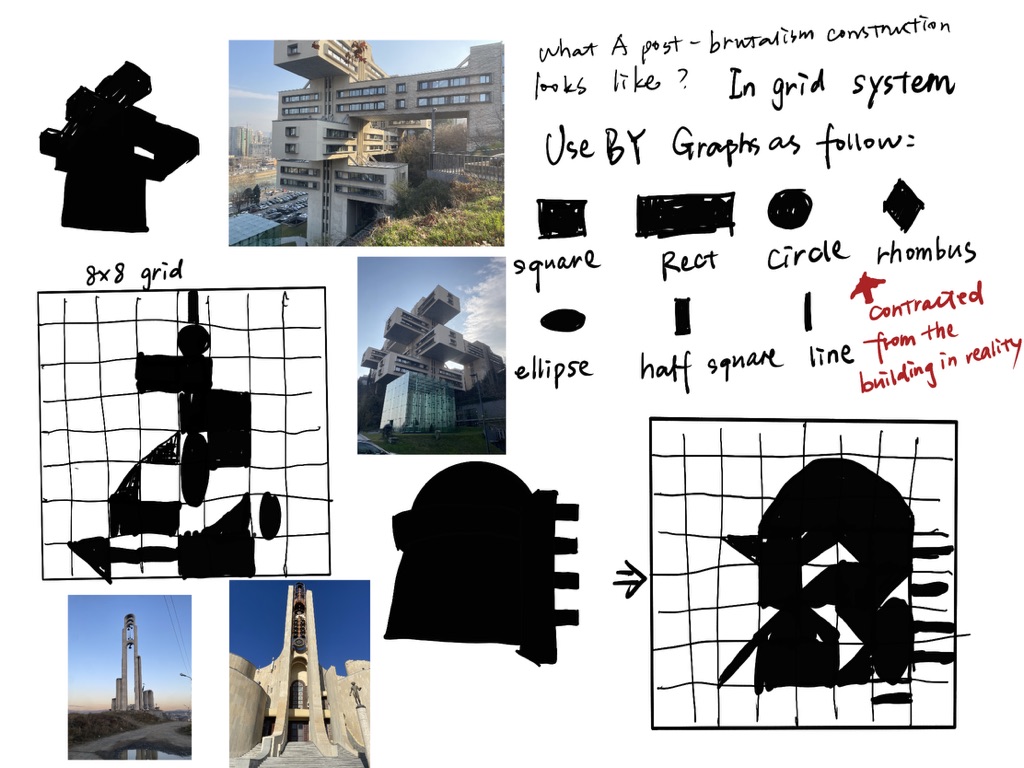
sketch
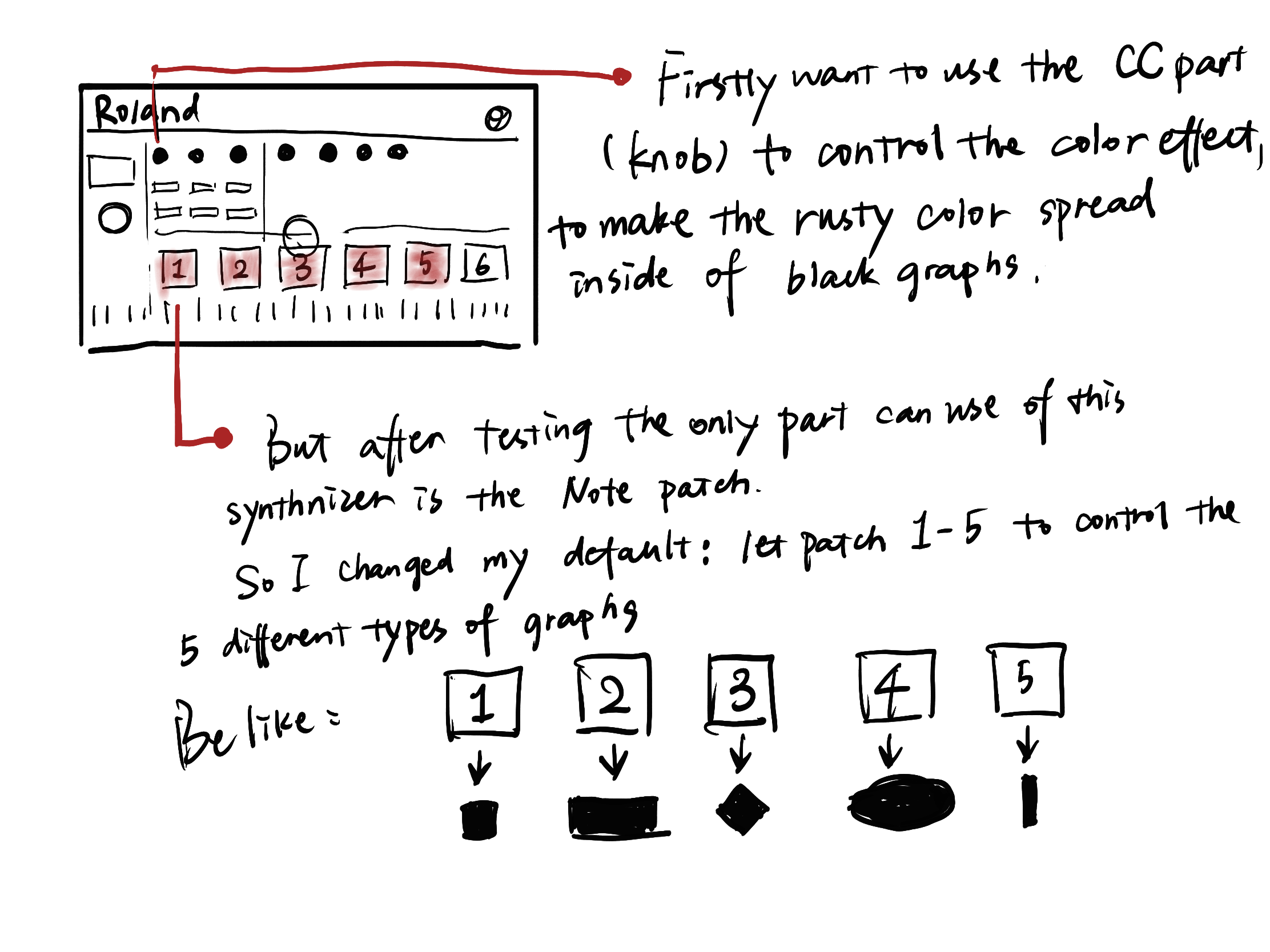
interaction sketch
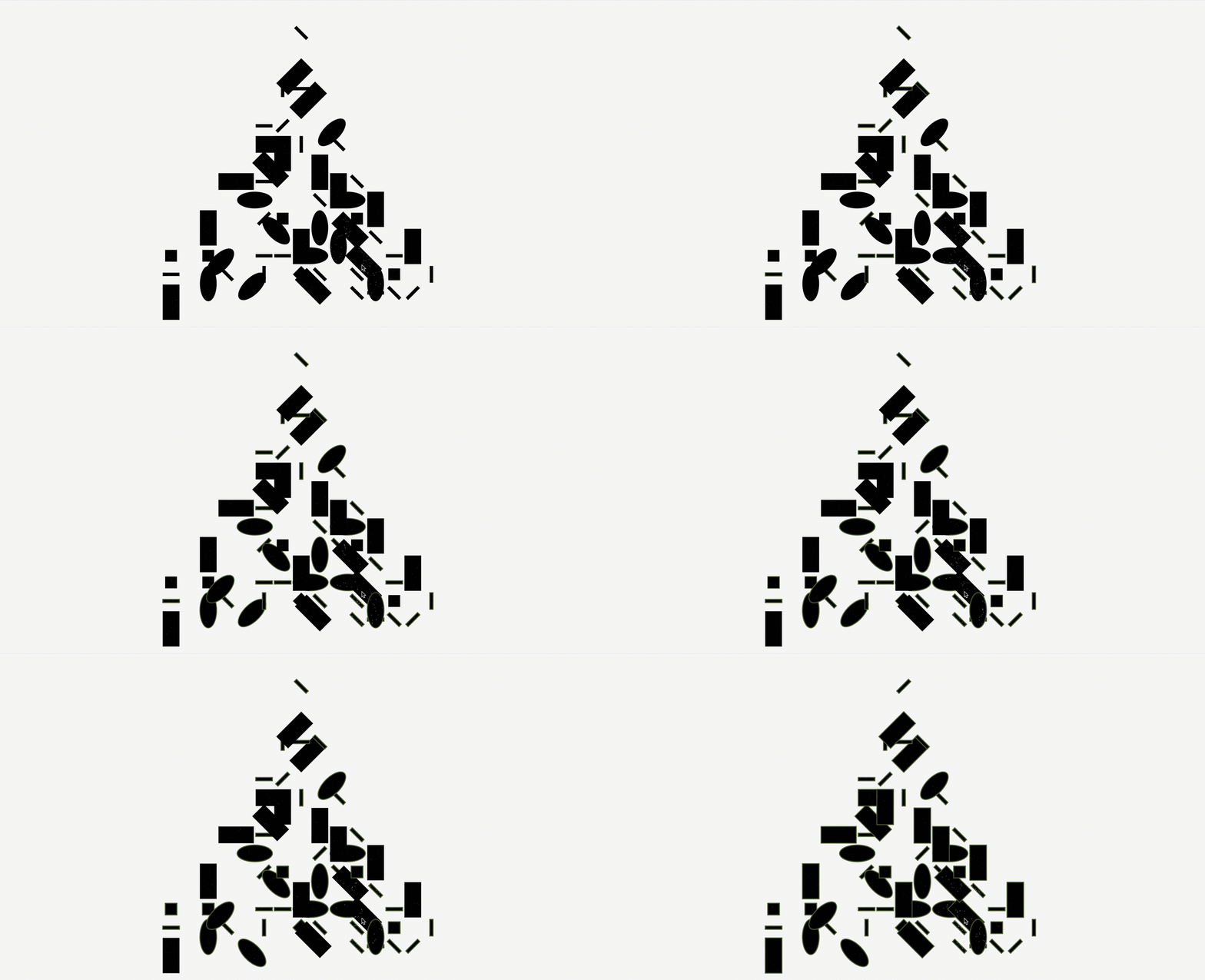
moss growth effect
particle effect